
Leadership Sessions For Technical Teams

You hired brilliant people. Getting them to move as one is a different problem.

Half-day and full-day sessions for engineering, research and leadership teams built from exceptional people — and structured work for the ninety days after an acquisition. On a private working farm north of Boulder. Nobody rides.

Working With Exceptional Minds

High ability is not simply more of the same.

Most of my working life has been spent with gifted, twice-exceptional and neurodivergent adults — first managing them in telecoms and fintech, then studying them clinically for twenty years. A few things are consistently true of exceptional people, and almost never named in a performance review.

They run at a different tempo

Very fast thinkers often arrive at a conclusion before the discussion has finished forming, then wait. The waiting reads as impatience, or as dismissiveness, or as not being a team player. It is a processing-speed difference that nobody in the room has language for — and once a team does have that language, a surprising amount of friction simply stops.

They are permeable

The most perceptive people on your team usually don't struggle to connect. They connect too much. They register the emotional state of a room and carry it out with them, and the only protection they have found is distance. From the outside that looks like aloofness or poor collaboration. It is neither. Give someone a way to stay themselves in a room and they stop needing to leave it.

Their intensity and their range come from the same place

The depth that produces work nobody else on the team could produce is the same depth that makes someone hard to sit across from on a Thursday afternoon. These are not two traits, one of which can be trained out. Asking for the output while managing away the intensity is asking for something that doesn't exist.

Hard problems are how they regulate

When your strongest engineer disappears into a difficult problem for six hours, that is generally not avoidance. For many people wired this way, demanding cognitive work is what settles the nervous system rather than what drains it. Managers who read it as withdrawal tend to intervene in exactly the wrong direction.

None of this needs correcting. It needs to be understood by the people around it, and translated into how the team actually works — which is a different job from managing performance, and it is the one I do.

What You're Dealing With

The talent was never the problem.

Most leadership development is designed for the middle of the distribution. It assumes a range your team doesn't sit in, which is why it can be well delivered and still change nothing.

Two senior engineers who route around each other, and everyone plans around it.

What resolves itTwo specialists in genuine disagreement will keep circling as long as the argument stays verbal, because both are good at arguing. Working with a horse moves it out of language, where neither of them has the advantage, and the disagreement turns out to be about something other than what they were debating.

A brilliant contributor you cannot replace, who your HR partner keeps flagging.

What resolves itIntensity and arrogance look almost identical from the outside and come from completely different places. When the team watches that person work with an animal that has no stake in the hierarchy, they see the difference directly — and stop managing around a problem that was never the problem.

A leadership team of seven very smart people who cannot converge on a decision anyone will own.

What resolves itFive exceptional minds running at five different tempos is a synchronisation problem wearing the clothes of a decision-making one. No amount of better process fixes it, because the process was never the constraint. Seeing the tempo difference in the body is what makes it addressable.

A manager promoted for technical brilliance who is quietly drowning.

What resolves itTechnical mastery and leading people draw on different capacities, and moving between them is a real transition, not a matter of effort. Horses respond to what a person is transmitting rather than what they intend, which makes presence something you can work on directly instead of something you're told you lack.

An acquired team that is polite in every meeting and updating their CVs on Sunday.

What resolves itStructured work inside the window that decides retention. Trust between two groups doesn't come from being told the cultures are compatible. It comes from having done something demanding alongside a specific person from the other side, and finding out they're competent.

And none of it costs you a week of the team's calendar, a flight, or a sprint. A half day, twenty minutes from Boulder, and they are back at their desks in the afternoon.

The Half Day

What actually happens.

Four to six people. Structured, unhurried, and built around the specific thing your team is carrying rather than a fixed curriculum.

08:30
Indoors

Coffee, and the actual question

What each person wants out of the morning, said out loud in front of the others. It takes longer than people expect, and it sets everything after it.

09:15
Indoors

The thing that isn't being said

Not a framework. The specific tension in your leadership meeting that everyone is working around. We name it here so the arena has something real to work on.

09:50
Arena

Observation only

Nobody handles a horse yet. You watch the herd and describe what you see — and the group discovers it saw five different things. That gap is the first finding of the day.

10:30
Arena

Individual work, group watching

One person, one horse, a straightforward task. The horse responds to the state underneath the intention, not the intention. This is the uncomfortable, useful part, and it is where the morning earns its cost.

11:45
Indoors

Debrief and translation

What happened, what it maps to in the operating rhythm you go back to, and the two or three things that change on Monday. Specific commitments, not intentions.

12:30
Close

Lunch, if you want it

Optional and unstructured. Some groups do their best thinking here.

Written summary to the sponsoring leader within 48 hours — what surfaced, where the risk sits, what to watch. Individual disclosures stay with the individual.

PHOTO TO ADD — people in the arena mid-session, on the ground with a horse, in normal work clothes. 21:9.
All work is on the ground. No riding, no experience needed.
Three Ways In

Start small. Most people do.

01

The Leadership Session

$4,500 — half day

Four to six people, your leadership team. The usual first engagement — small, senior, and you are in the room rather than watching to see how your team reacts.

02

The Team Intensive

$9,500 — full day

Up to twelve people, an intact team. Team dynamics in the morning, applied leadership in the afternoon. For groups carrying conflict that has been routed around for two quarters.

03

The Integration Intensive

Scoped — typically $35–75k

Ninety days, post-merger. Two herds don't become one herd because the org chart says so. Scoping with both leadership groups, an on-site intensive with the combined team, coaching for the leaders carrying the integration, and a follow-through session when the real friction surfaces.

Every engagement starts with a call and short conversations with two or three people on the team. I don't run a standard curriculum at a problem I haven't heard yet.

The Setting

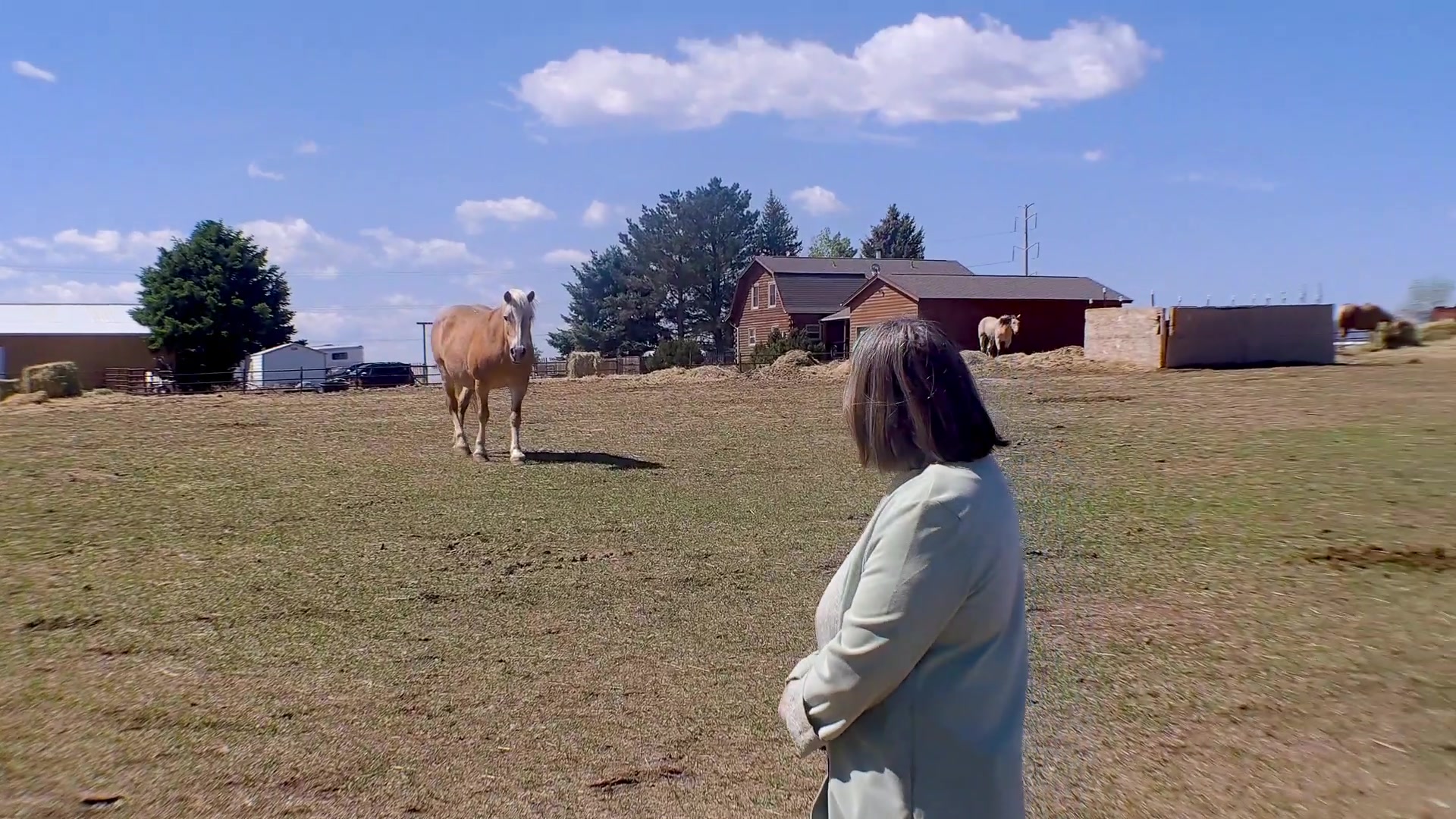
A quiet property, forty minutes from Denver.

Senior people don't get honest with strangers watching from the rail. That isn't a preference — it is the constraint that decides whether the day works at all, and it is why the property runs one group at a time.

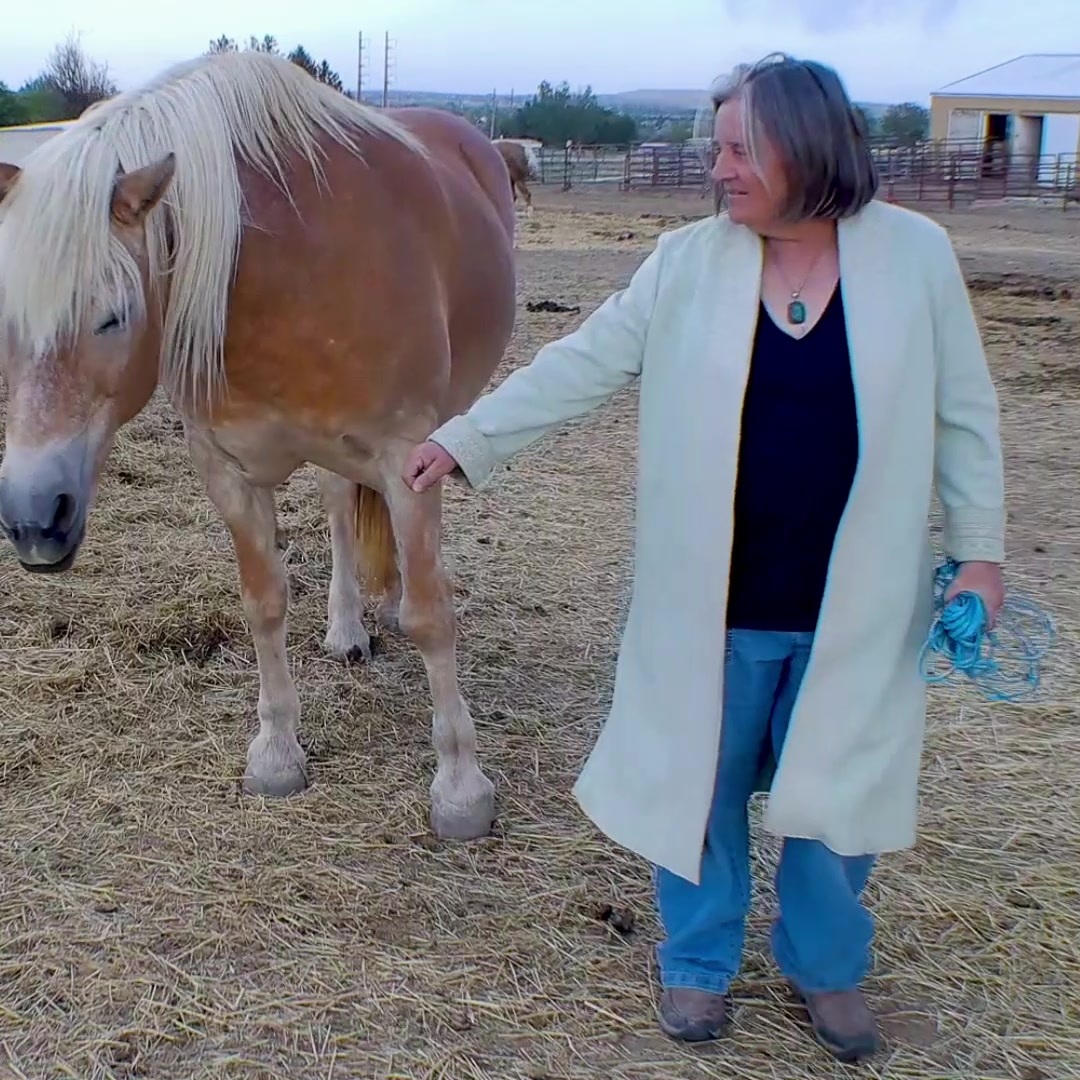
A horse at close range at first light The property, showing open ground and outbuildings Catherine working with a horse on the ground
Before You Commit Anything

Come and walk the property first.

Bringing your team somewhere unproven is a bigger ask than the invoice. So come out on your own first — an hour, no charge, no pitch. See the room, the arena and the horses, meet me, and decide whether you would want your people standing here.

It is the fastest way to find out. If the answer is no, you have lost an hour and a short drive.

The Method

Horses have the capacity to dissemble. They choose not to.

A horse responds to the state of a nervous system rather than to a title, a tone, or an intention. That makes it an unusually accurate instrument. Someone who has spent fifteen years being difficult to read gets to see, in a few seconds and without anyone's interpretation in the way, exactly what they transmit under pressure.

That is the whole mechanism, and it is why the work holds. Insight that arrives through the body is remembered differently from insight that arrives through a slide.

Who Runs It

Two careers. One lens.

Catherine Mathon

I studied pharmacology first and started my career in the pharma industry. Then I moved into IT for the telecoms industry and did a masters in business administration. After twenty years in telecoms and fintech running large teams across three continents, I went back to school to study clinical psychology and became a licensed professional counselor.

Since then my clinical work has concentrated almost entirely on gifted, twice-exceptional and neurodivergent people — the same population I spent two decades managing, and the population I belong to myself. I hold specialist training in the emotional and developmental needs of gifted adults, which is an unusual thing to bring into a corporate arena and the reason this work is specific rather than general.

Team building and cohesion · managing conflict · reorganisations and mergers · budgets and P&L · managing neurodivergent and brilliant people · succession planning · managing up · executive wellbeing · strategic hiring · building a network · leading through crisis · negotiations

Most coaches understand performance. Most clinicians understand the mind. Very few have formal training across business and clinical psychology, have run organisations at scale across industries and continents, and have spent twenty years on what makes exceptional people effective or miserable at work.

That combination is what lets the work be strategic where you need strategy and precise where you need depth.

Reasonable Questions

Before you book.

My engineers will hate this.

Some will arrive expecting to, and that is a reasonable position to hold — a lot of experiential work asks people to perform enthusiasm they don't feel. Nothing here does. The horse responds to what is actually happening rather than to effort or attitude, so scepticism costs nothing and often makes for the most interesting session of the morning.

Is this therapy?

No. This is an executive coaching and leadership development program. It is not psychotherapy, medical advice, or psychiatric consultation. I am a licensed clinician and that training is why the work is precise — but the container is professional development, and nothing individual is reported back to the employer.

Does anyone ride?

No. All work is on the ground and no experience with horses is needed. Tell me about mobility needs, allergies or nervousness around animals when we talk, and I'll build around it.

What if it doesn't land?

Come and see the place first, then start with the half day — four to six senior people, you in the room, inside most directors' discretionary spend. You will know inside a morning whether to bring the wider team.

What do we walk away with?

Two or three specific commitments from the group, and a written summary to you within 48 hours: what surfaced, where the retention or friction risk actually sits, and what to watch over the next quarter. It is rarely where the org chart suggests.

How does billing work?

Team engagements are invoiced to the company, with a purchase order if your procurement process needs one. A deposit holds the date and the balance is due after the session.

The Next Step

Thirty minutes. Straight answers.

Tell me what is happening with the team. Either this is the right thing for it or it isn't — and if it isn't, I'll say so and point you at what is.